
There’s a line in the sand — and the concentrated synthetic 7-OH industry is trying to erase it.
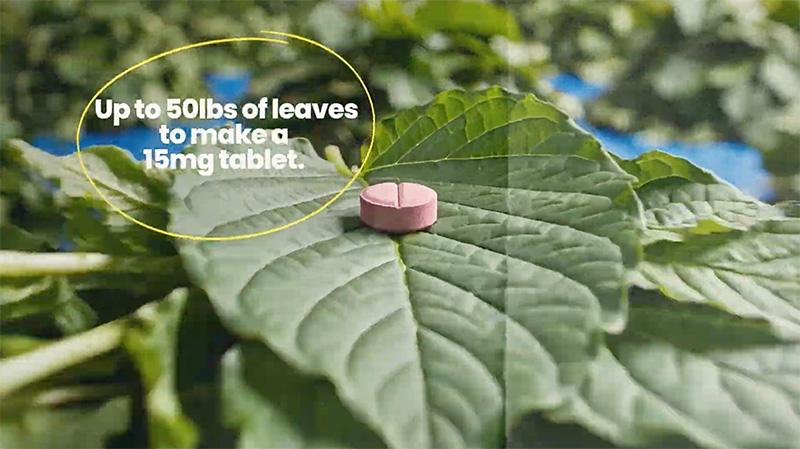
On one side: natural kratom leaf, a plant used safely for centuries. On the other: concentrated, chemically converted 7-OH tablets like Perks, OXin, and Opia — engineered in a lab to deliver hundreds of times the 7-OH found anywhere in nature.
They’re not the same thing. And the people selling the concentrated synthetic 7-OH know it.
As Dr. Christopher McCurdy puts it: natural 7-OH barely exists in the living leaf. To get it at commercial strength, “we have to do the chemistry to make it.” It can’t be harvested. It has to be synthetically manufactured.
Think of it this way: an apple a day keeps the doctor away. But if you converted the small amount of amygdalin found in the seeds of an apple into cyanide (which the body does), concentrated it by hundreds of times, and sold it as a “dietary supplement” and called it an ‘apple; — that would be fraud. No one would call it an apple.
So no one should call concentrated synthetic 7-OH “natural”, or ‘kratom’.
When President Trump said his administration is looking at “natural 7-OH,” he meant exactly that — natural. Not a chemically engineered opioid in a gas-station blister pack. The concentrated synthetic 7-OH industry is twisting his words, the same playbook big pharma and big food have always run.
The answer is simple:
Protect natural kratom leaf. Make concentrated synthetic 7-OH a schedule 2 substance.
That’s the MAHA answer. That’s the consumer safety answer. And it’s the only one that doesn’t let the concentrated synthetic 7-OH industry dupe America.
Leave a Reply