
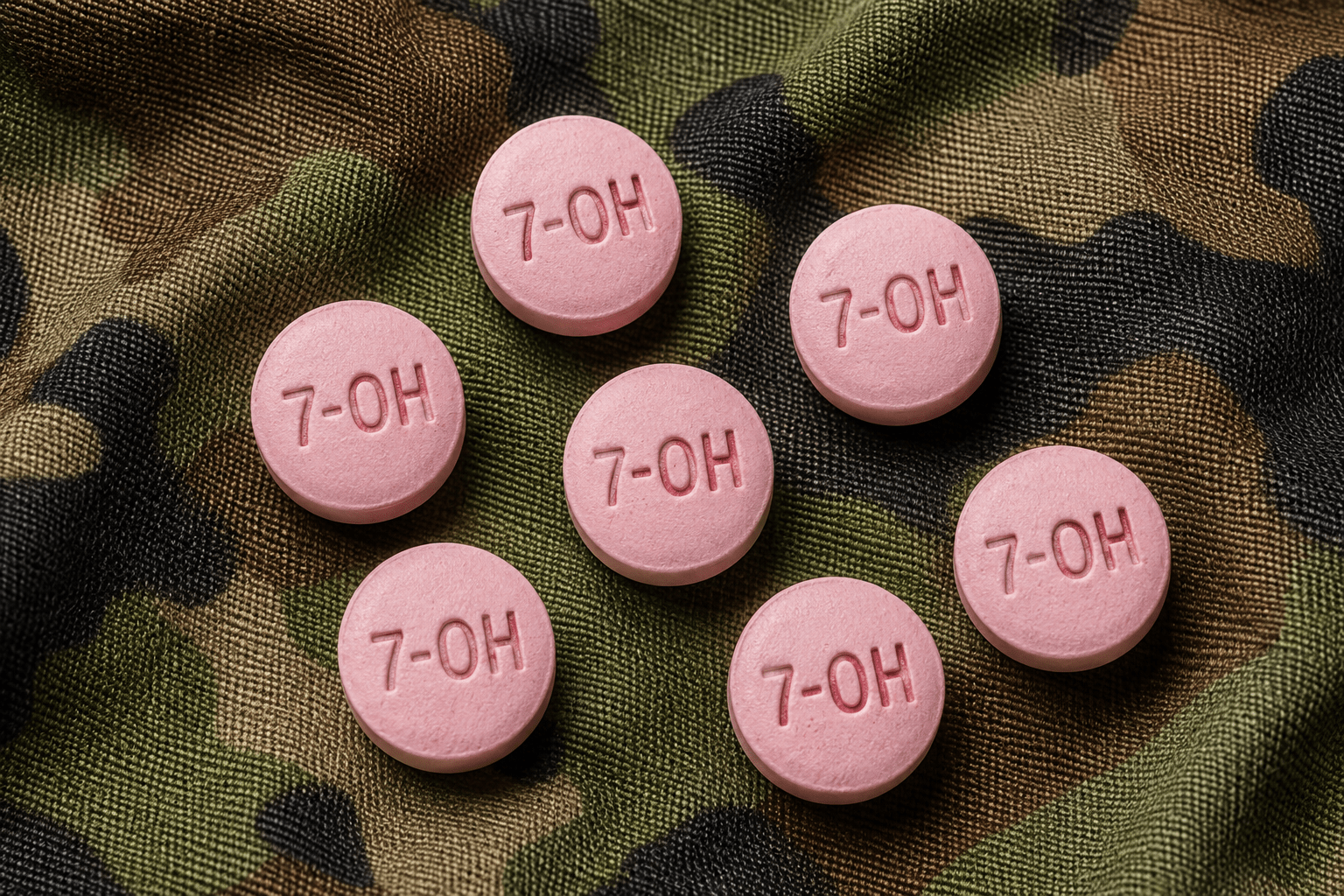
Veteran members of Congress — a retired Marine Corps general and an Army veteran and physician — are urging the Drug Enforcement Administration to schedule concentrated synthetic 7-hydroxymitragynine (7-OH) products flooding gas stations, while protecting access to natural kratom leaf.
The pressure on Washington to confront the fourth wave of the opioid epidemic is no longer coming only from public-health officials. It is coming from veterans on Capitol Hill.
Rep. Jack Bergman (R-MI), a retired U.S. Marine Corps Lieutenant General, and Sen. Roger Marshall, M.D. (R-KS), a U.S. Army veteran and physician, have each written to the DEA asking the agency to crack down on concentrated synthetic 7-OH products — and to draw a clear, enforceable line between these lab-made opioids and the natural kratom leaf products they are disguised as.
Their message is consistent, and it is the message at the heart of this campaign: Target the synthetic. Protect the natural. Stop Gas Station Heroin.

A Marine Corps general: “Further delay is unacceptable.”
Rep. Jack Bergman (R-MI) — a retired U.S. Marine Corps Lieutenant General and the highest-ranking combat veteran to serve in Congress — wrote to the DEA urging an emergency scheduling order for concentrated synthetic 7-OH, warning that these candy-colored, opioid-like products are spreading nationwide and have been linked to serious harm.
Crucially, Rep. Bergman drew the same distinction this campaign has insisted on from the start:
“Any federal response must draw a clear and enforceable distinction between concentrated synthetic 7-OH and natural kratom leaf… DEA guidance should therefore explicitly exclude natural kratom leaf.” — Rep. Jack Bergman (R-MI), retired U.S. Marine Corps Lieutenant General,
His closing was blunt: “Further delay is unacceptable… Timely action can prevent further loss of life.”
That a decorated Marine general is sounding this alarm should tell Washington everything it needs to know about who is being hurt — including the veterans who turned to what they believed was a natural product and were handed a synthetic opioid instead.

A physician in the Senate: “More closely resembles fentanyl.”
Sen. Roger Marshall, M.D. (R-KS) — an Army veteran and physician — has written to the DEA more than once, and his clinical framing is stark.
“7-OH is a potent synthetic opioid agonist… Its pharmacology more closely resembles that of fentanyl than any traditional botanical supplement.” — Sen. Roger Marshall, M.D. (R-KS),
letter to the DEA, January 2026
In an earlier letter, Sen. Marshall spelled out exactly why these products are nothing like the plant they impersonate — and called them what they are:
Concentrated synthetic 7-OH products are “adulterated chemical analogues engineered to deliver intense opioid-like effects that no natural kratom product could produce.” — Sen. Roger Marshall, M.D. (R-KS),
He warned that the manufacturers behind these substances are “contributing to a potential fourth wave of the opioid epidemic,” and pressed the DEA to act swiftly while preserving legitimate commerce — scheduling the dangerous synthetics without sweeping in the natural leaf.
The legislation: END 7-OH Act
In addition to the letter, in March 2026, Rep. Gus Bilirakis (R-FL) introduced the END 7-OH Act (H.R. 8000), which would place concentrated synthetic 7-OH in Schedule I of the Controlled Substances Act while explicitly excluding the 7-OH that occurs naturally in the kratom leaf — writing the campaign’s core distinction directly into federal law.

Among its cosponsors is Rep. Vern Buchanan (R-FL) — a six-year Air National Guard veteran and chairman of the Ways and Means Health Subcommittee — adding another veteran voice to the push to target the synthetic while protecting the natural plant.
Read together, the letters make the case in one voice:
- These are not kratom. Natural kratom leaf contains only trace amounts of 7-OH. The products on gas-station shelves are isolated, chemically concentrated synthetic opioids — sold as supplements, packaged like candy.
- The science is settled enough to act. The FDA recommended scheduling concentrated synthetic 7-OH in 2025. Lawmakers say the evidentiary record is clear, and the DEA must move.
- Precision, not prohibition. Every letter insists the response target concentrated synthetic 7-OH while explicitly protecting the natural kratom leaf that has been used safely for generations.
- Delay costs lives. As one lawmaker put it, each day of inaction “legitimizes illicit distribution, and bolsters criminal networks.”
Take action: Congress has made its position clear. Now the DEA must act.
Demand emergency scheduling of concentrated synthetic 7-OH. Add your voice to the veteran-led petition to pull these products from store shelves:
Concentrated synthetic 7-OH is not natural leaf kratom. It’s not safe. It’s not regulated. It’s Gas Station Heroin — and it needs to be stopped.
stopgasstationheroin.com
Leave a Reply